
Meta Description: Want to earn daily from the stock market? Learn what is Intraday Trading, the risks and rewards involved, and a step-by-step guide to starting safely in India.
Ever wondered why some people spend their entire day glued to stock charts, buying and selling shares within minutes? Did you know that you can actually profit from a stock even if its price stays exactly the same by the end of the week?
In the world of finance, this fast-paced game is known as day trading. Understanding What is Intraday Trading? Risks and Rewards is crucial before you put your hard-earned money at stake. Simply put, intraday trading involves buying and selling stocks within the same trading day. You don’t hold your positions overnight; you “square off” everything before the market closes.
In this guide, you will learn the mechanics of daily trading, how to leverage small price movements for profit, and the strict risk management rules you must follow to survive the Indian stock market.
What is [What is Intraday Trading? Risks and Rewards]? (For beginners)
Intraday trading is a strategy where you aim to capitalize on the short-term price fluctuations of a stock. Unlike “Delivery” trading, where you buy shares and keep them in your Demat account for months or years, intraday is strictly a one-day affair.
If you buy 100 shares of SBI at 10:00 AM and sell them at 3:15 PM, you have performed an intraday trade. In the Indian market (NSE and BSE), the window for this is usually between 9:15 AM and 3:30 PM.
Alt text: Timeline of an intraday trade showing entry and exit within the same market session.
Key Terms You Should Know:
- Square Off: The act of closing your open position. If you bought, you sell; if you sold (shorted), you buy back.
- Leverage (Margin): This is a “loan” your broker gives you. If you have ₹10,000, a 5x leverage allows you to trade shares worth ₹50,000.
- Short Selling: A unique feature where you sell a stock first (at a high price) and buy it back later (at a low price) because you expect the price to fall.
Why [What is Intraday Trading? Risks and Rewards] Matters for Traders (India context)
For the Indian trader, intraday trading is highly attractive because of its high-churn nature and the liquidity of our markets. On the NSE (National Stock Exchange), stocks like Reliance, Infosys, and HDFC Bank have massive daily volumes, making it easy to enter and exit trades instantly.
The Rewards:
• Low Capital Requirement: Because of Margin, you can start with a smaller amount.
• No Overnight Risk: You don’t have to worry about global news crashing the market while you sleep; you are already out of your positions.
• Daily Income Potential: For skilled traders, it offers the chance to generate a regular cash flow.
The Risks:
• Market Volatility: Indian markets can be highly reactive to news. A single statement from the RBI can move the NIFTY 50 by hundreds of points in minutes.
• The Leverage Trap: While leverage increases profits, it also multiplies losses. If a stock drops 2% and you have 5x leverage, you lose 10% of your capital.
How to Apply [What is Intraday Trading? Risks and Rewards] (Step by Step)
Ready to try? Follow these steps to execute your first intraday trade safely.
Step 1: Choose Liquid Stocks
Don’t trade “Penny Stocks.” Choose stocks that have millions of shares traded daily.
• Look for stocks in the NIFTY 50 or Next 50 list.
• High liquidity ensures that your “Limit Orders” get executed without a huge gap in price.
Step 2: Use Technical Analysis
Intraday trading is 90% charts and 10% news.
• Study Candlestick Patterns to understand buyer and seller behavior.
• Use indicators like RSI (Relative Strength Index) or Moving Averages to find entry points.
• Suggestion: Keep a 5-minute or 15-minute chart open on your screen.
Alt text: A technical analysis chart showing support and resistance levels for intraday entry and exit.
Step 3: Set Your Stop Loss and Target
Before you click “Buy,” you must know when you will leave.
• Stop Loss (SL): This is the price at which you admit you were wrong and exit to prevent further loss.
• Target: The price where you will take your profit.
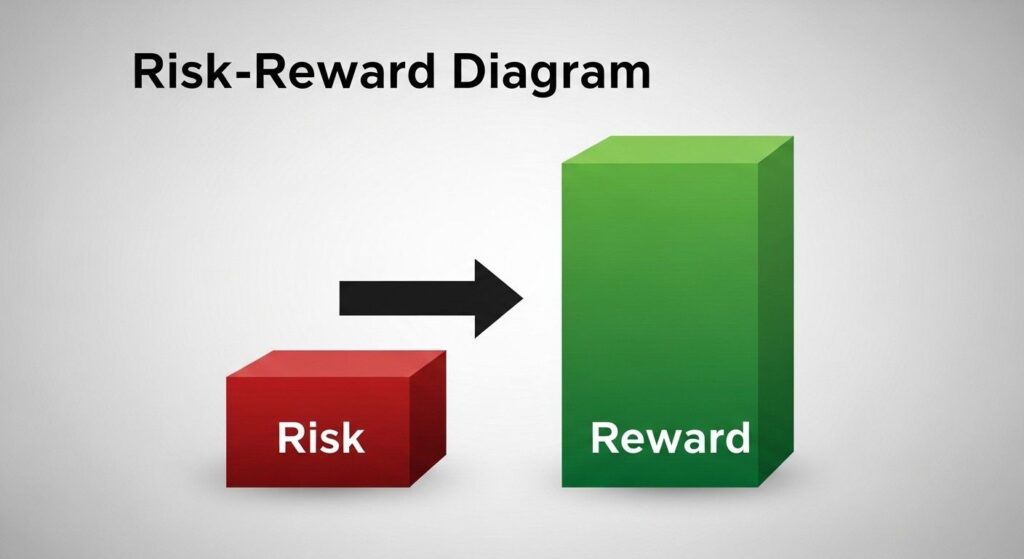
• Rule of Thumb: Aim for a Risk-Reward ratio of at least 1:2 (Risking ₹1 to earn ₹2).
Common Mistakes to Avoid
• Over-trading: Many beginners try to take 10-20 trades a day to “recover” a loss.
o The Fix: Limit yourself to 2-3 high-quality trades per day.
• Ignoring the Trend: “The trend is your friend.” Don’t try to buy a stock that is crashing.
o The Fix: Use the NIFTY trend as a guide; if the market is bullish, look for “Buy” opportunities.
• Not Factoring in Brokerage: Since you trade frequently, brokerage and STT (Securities Transaction Tax) add up.
o The Fix: Use a brokerage calculator to see how much the stock needs to move just for you to break even.
India vs USA Comparison
The rules for day trading differ significantly between the two countries.
| Feature | India (NSE/BSE) | USA (NYSE/NASDAQ) |
| Minimum Capital | No legal minimum; ₹5,000-10,000 is enough. | PDT Rule: Must maintain $25,000 for frequent day trading. |
| Trading Hours | 9:15 AM to 3:30 PM IST | 9:30 AM to 4:00 PM EST |
| Short Selling | Allowed for intraday only. | Allowed, but subject to “Hard to Borrow” rules. |
| Taxation | Speculative Business Income (Taxed at slab rates). | Capital Gains (Short-term rates). |
Visual Elements
- Image 1 (Risk-Reward Diagram): A simple bar chart showing a small red block (Risk) versus a larger green block (Reward).
- Alt Text: Risk vs Reward ratio diagram for trading.
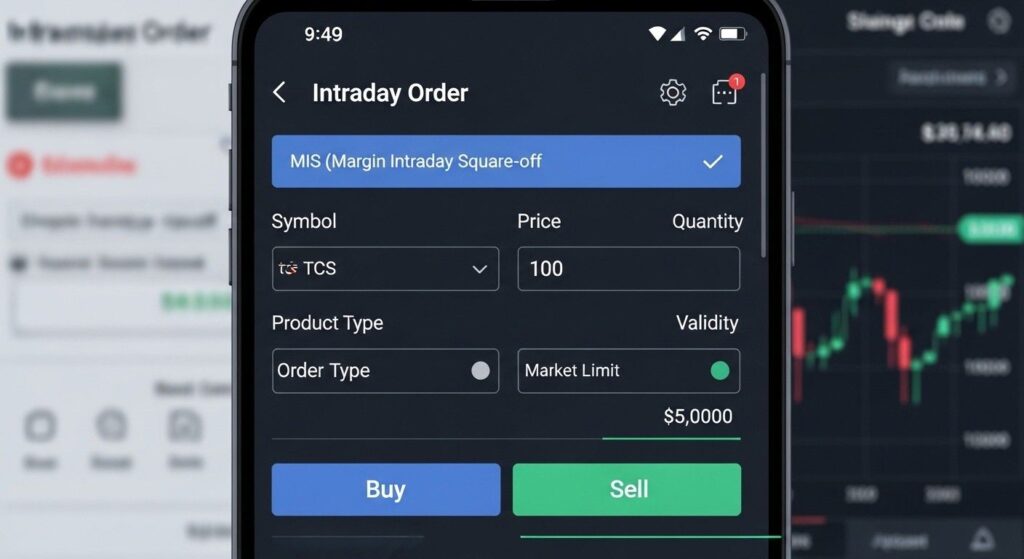
- Image 2 (Order Window): A mock-up of an intraday order screen showing the “MIS” (Margin Intraday Square-off) option selected.
- Alt Text: Trading app screen showing an intraday order setup.
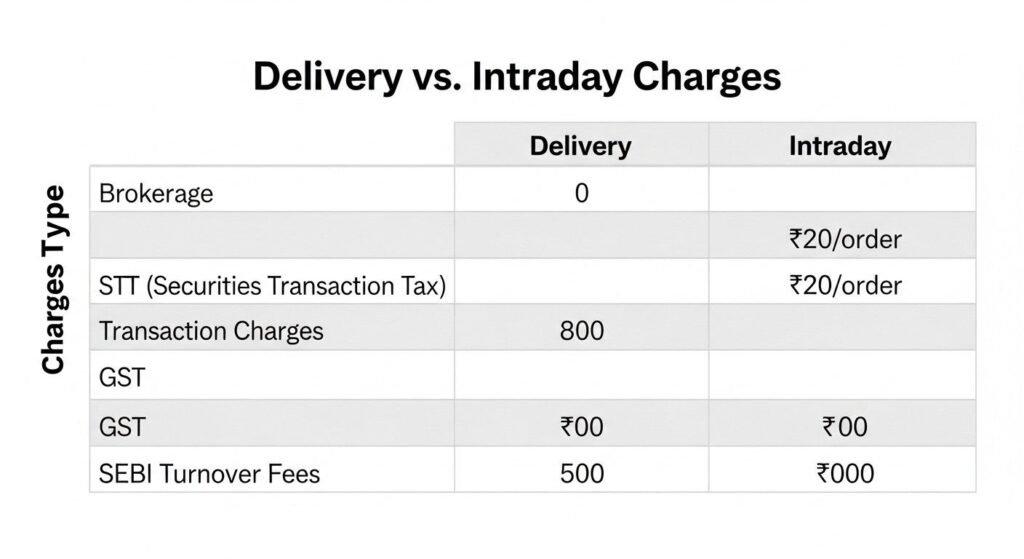
- Image 3 (Comparison Table): A table comparing Delivery vs. Intraday charges.
Alt Text: Comparison table of brokerage and taxes for different trade types
Actionable Tips
• Use the 1% Rule: Never risk more than 1% of your total trading capital on a single trade.
• Trade only in the first or last hour: Market volatility (and opportunity) is highest between 9:15-10:30 AM and 2:30-3:30 PM.
• Keep a Trading Journal: Write down every trade, why you took it, and what you felt; it’s the only way to improve.
• Avoid “Tips”: Telegram and WhatsApp “tips” are often traps; rely on your own chart analysis.
• Start with Virtual Money: Use paper trading apps for at least 2 weeks before using real cash.
Q1: Can I do intraday trading with ₹1,000?
Answer: Technically, yes. With 5x leverage, you can buy shares worth ₹5,000. However, the brokerage might eat up most of your small profits.
Q2: What happens if I forget to square off my intraday trade?
Answer: Most Indian brokers will automatically square off your position around 3:15 PM or 3:20 PM and may charge a “Call & Trade” fee (usually ₹50 + GST).
Q3: Is intraday trading gambling?
Answer: If you trade based on “feelings” or “luck,” it is gambling. If you trade based on a tested strategy and strict risk management, it is a business.
Q4: Do I need a high-end PC for intraday trading?
Answer: No. While a laptop is better for viewing charts, most modern trading apps in India are powerful enough to execute trades from a smartphone.
Q5: Is intraday profit taxable?
Answer: Yes. In India, intraday profit is considered “Speculative Business Income” and is added to your total income and taxed according to your income tax slab.
Conclusion
Understanding What is Intraday Trading? Risks and Rewards is the difference between a successful career and a blown account. It offers the thrill of quick profits but demands the discipline of a soldier. Start slow, prioritize capital preservation over profits, and remember that the market will always be there tomorrow.