
Meta Description: Master the stock market! This Stock Market Terminology: Complete Glossary breaks down complex jargon into simple terms to help you trade with confidence today.
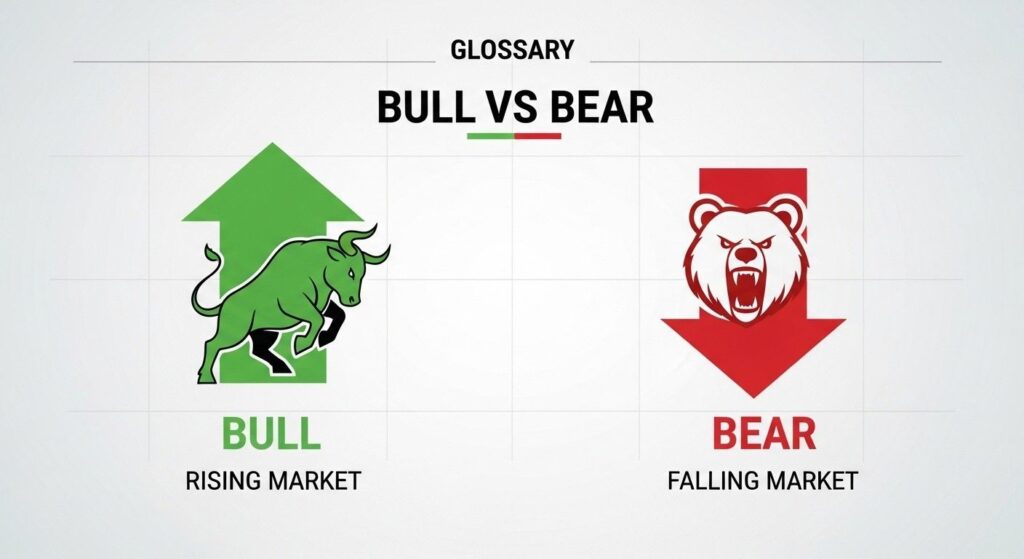
Ever wondered why traders talk about “bulls” and “bears” instead of just saying prices are going up or down? Did you know that missing the meaning of a single term like “Stop Loss” could cost you your entire day’s profit?
Entering the world of investing without knowing the language is like trying to drive in a foreign country without knowing the road signs. This Stock Market Terminology: Complete Glossary is designed to be your GPS. In this guide, we will simplify the “finance-speak” used on Dalal Street, explaining everything from basic share definitions to complex derivative terms.
By the end of this article, you will be able to read a financial news report or watch a business channel and actually understand what the experts are saying.

What is Stock Market Terminology: Complete Glossary? (For beginners)
At its simplest, stock market terminology is the set of specific words and phrases used to describe how companies are valued, how trades are executed, and how the market behaves. Think of it as the “vocabulary of wealth.”
If you are a beginner, you don’t need to be a math genius, but you do need to know the basic building blocks. Let’s look at the three most fundamental terms:
- Equity/Shares: This represents ownership. When you buy a share of a company like Reliance, you become a partial owner.
- Portfolio: This is simply the collection of all the investments you own—stocks, bonds, or gold.
- Dividend: This is a portion of the company’s profit that they decide to share with you, the shareholder, as a reward for your investment.
Alt text: A beginner’s mind map of essential stock market terms.
Why Stock Market Terminology: Complete Glossary Matters for Traders (India context)
In the Indian market, terminology isn’t just about sounding smart; it’s about following the rules set by SEBI and the NSE/BSE. For example, if you don’t understand the difference between Intraday and Delivery, you might unintentionally close a position too early or face unexpected charges.
Relevance for Indian Traders:
- The Indices: Terms like NIFTY 50 and Sensex are the “thermometers” of the Indian economy. Knowing how they are calculated helps you understand if the broad market is healthy.
- Corporate Actions: In India, companies frequently announce Bonus Issues or Stock Splits. If you don’t know these terms, you might be confused when your share price suddenly drops but your number of shares doubles.
- Taxation: Terms like LTCG (Long Term Capital Gains) and STCG (Short Term Capital Gains) determine how much money actually stays in your pocket after the government takes its share.
How to Apply Stock Market Terminology: Complete Glossary (Step by Step)
Learning these terms is best done in the order of a real trade. Follow these steps to use your new vocabulary in action:
Step 1: Analyzing the Stock (Fundamental & Technical)
Before buying, you look at the “price tag” and the “value.”
- P/E Ratio (Price-to-Earnings): This tells you if a stock is expensive or cheap relative to its earnings.
- Market Cap: This categorizes companies into Large-cap (like TCS), Mid-cap, or Small-cap.
- Support & Resistance: These are price levels where a stock usually stops falling (Support) or stops rising (Resistance).
Step 2: Placing the Order
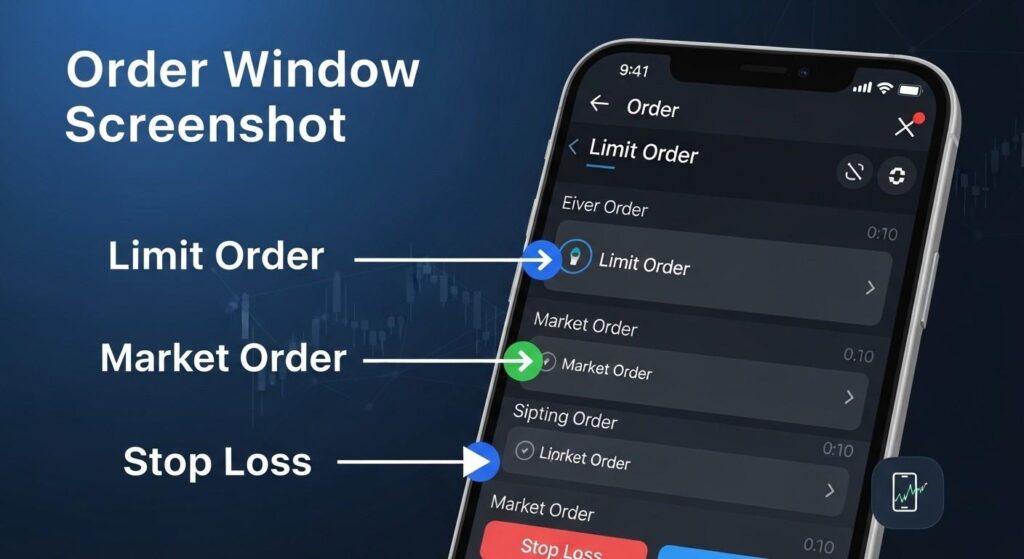
When you open your trading app (like Zerodha or Groww), you will see different order types.
- Market Order: Buying at whatever the current price is right now.
- Limit Order: Telling the system, “I will only buy this stock if it hits ₹500.”
- Stop Loss (SL): Your safety net. It automatically sells your stock if it drops to a certain level to prevent a bigger loss.
Step 3: Post-Trade Monitoring
Once the trade is done, you track its status.
- Unrealized Profit/Loss: The money you have “on paper” while you still hold the stock.
- Realized Profit/Loss: The actual money you made or lost after selling the stock.
- T+1 Settlement: In India, this is the cycle where your money or shares are settled one business day after the trade.
Common Mistakes to Avoid
- Confusing “LTP” with your Buy Price: LTP (Last Traded Price) is the current market rate, not what you paid for it. Beginners often get confused when looking at their dashboard.
- Ignoring the “Bid-Ask Spread”: The Bid is what buyers want to pay, and the Ask is what sellers want. If the gap (spread) is too wide, you might lose money the moment you buy.
- Mixing up Bonus vs. Dividend: A bonus gives you more shares; a dividend gives you cash.
The Fix: Always check the “Corporate Actions” tab on your broker’s app to see which one was announced.
India vs USA Comparison
The stock market language is mostly global, but there are local “dialects.”
| Term Type | India (NSE/BSE) | USA (NYSE/NASDAQ) |
| Market Index | NIFTY / Sensex | S&P 500 / Dow Jones |
| Market Regulator | SEBI | SEC |
| Trade Settlement | T+1 Cycle | T+1 Cycle (Standardized in 2024) |
| Locker for Shares | Demat Account | Brokerage Account (Street Name) |
Visual Elements
Actionable Tips
- Use a Paper Trading App: Practice using terms like “Limit Order” and “Stop Loss” with virtual money before using real cash.
- Read the Financial Newspaper: Spend 15 minutes daily reading headlines from The Economic Times to see these terms in a real-world context.
- Set a “Stop Loss” for Every Trade: Never enter a trade without a pre-defined exit point; it’s the most important term you’ll ever use.
- Check the P/E Ratio: Before buying any “hot” stock, compare its P/E with the industry average to ensure you aren’t overpaying.
- Maintain a Trading Journal: Write down why you bought a stock using the terms you learned (e.g., “Bought at Support level”).
Q1: What is a “Blue-chip” stock?
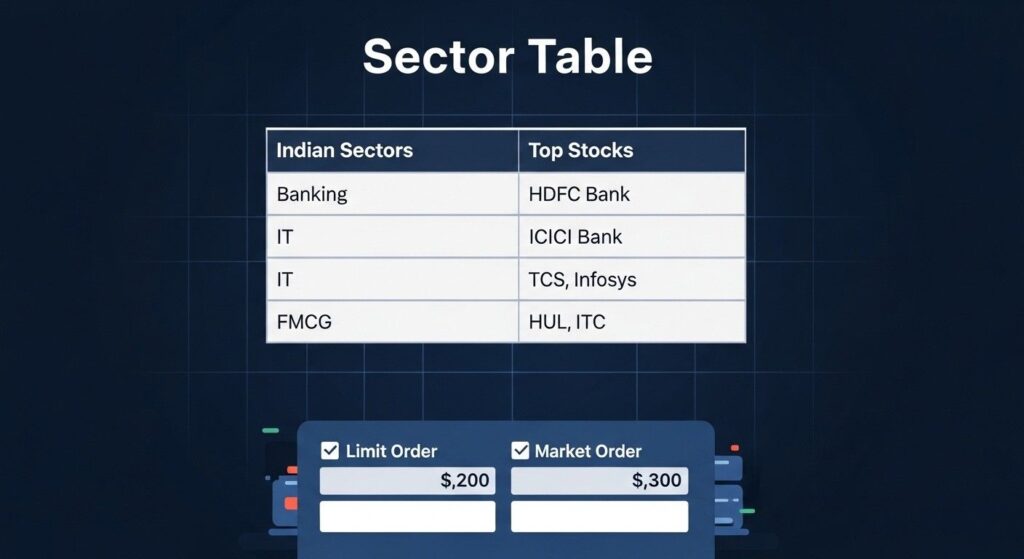
Answer: In India, these are large, well-established companies with a track record of stable earnings, such as HDFC Bank or Reliance Industries. They are considered safer for beginners.
Q2: What is the difference between “Volume” and “Liquidity”?
Answer: Volume is the total number of shares traded in a day. Liquidity refers to how easily you can buy or sell a stock without changing its price significantly.
Q3: What does “Square Off” mean?
Answer: This is a common Indian term that means closing your open position. If you bought shares in the morning and sold them in the afternoon, you have “squared off” your trade.
Q4: What is a “Circuit Breaker”?
Answer: To prevent extreme panic, the exchange stops trading a stock if it rises or falls too much in a single day (e.g., 5%, 10%, or 20%).
Q5: What is an IPO?
Answer: Initial Public Offering. It is the first time a private company offers its shares to the public to raise money.
Conclusion
Mastering this Stock Market Terminology: Complete Glossary is your first real investment in your financial future. When you understand the language, the “noise” of the market turns into clear, actionable information. You stop gambling and start investing. Remember, every expert was once a beginner who took the time to learn these definitions.
Which term did you find the most confusing before reading this? Comment below and let’s discuss!