
META DESCRIPTION:
Master candlestick patterns with this complete guide. Learn types, examples, and how to use them for better trading decisions.
INTRODUCTION
Did you know that a single candle on a chart can tell you whether buyers or sellers are in control? Ever wondered how traders predict price moves just by looking at charts?
The answer lies in Candlestick Patterns: Complete Guide with Examples. These patterns help you understand market psychology and future price direction.

In this article, you’ll learn what candlestick patterns are, how they work, and how to use them in real trading—especially in Indian markets like NIFTY and Sensex. Whether you’re a beginner or improving your skills, this guide will simplify everything for you.
What is Candlestick Patterns: Complete Guide with Examples? (For beginners)
Candlestick patterns are visual representations of price movement in the stock market. Each “candle” shows four key data points:
- Open price
- Close price
- High price
- Low price
Basic Structure of a Candlestick
- Body → Difference between open and close
- Wick (Shadow) → Highest and lowest price
Types of Candles
- Green Candle → Price increased (Bullish)
- Red Candle → Price decreased (Bearish)
Common Candlestick Patterns
1. Bullish Patterns (Buy Signal)
- Hammer → Indicates reversal after downtrend
- Bullish Engulfing → Strong buying pressure
- Morning Star → Trend reversal signal
2. Bearish Patterns (Sell Signal)
- Shooting Star → Indicates reversal after uptrend
- Bearish Engulfing → Strong selling pressure
- Evening Star → Trend reversal
3. Neutral Patterns
- Doji → Market indecision
- Spinning Top → Weak trend
Why Candlestick Patterns Matters for Traders (India context)
Understanding Candlestick Patterns: Complete Guide with Examples is extremely useful in Indian stock markets.
Why it matters:
- Helps identify entry and exit points
- Improves accuracy in intraday trading
- Works well with Indian stocks like Reliance, TCS, HDFC Bank
Indian Market Example
Example 1:
- NIFTY shows a hammer pattern after falling
- Indicates possible reversal → Buy opportunity
Example 2:
- Reliance forms bearish engulfing
- Indicates selling pressure → Sell or avoid
Real Benefit
Without candlestick patterns → Random trading
With candlestick patterns → Smart decisions
They give you a visual understanding of market sentiment.
How to Apply Candlestick Patterns (Step by Step)
Step 1: Learn Basic Candle Structure
Start by understanding individual candles.
Focus on:
- Body size → Strength of movement
- Wick size → Rejection of price
Example:
- Long green body → Strong buying
- Long upper wick → Selling pressure
Screenshot Suggestion:
Labelled candlestick showing open, close, high, low.
Step 2: Identify Patterns on Chart
Look for patterns in real charts.
How to do:
- Open TradingView or chart platform
- Select stock (like Infosys)
- Observe last 20–30 candles
Focus on:
- Engulfing patterns
- Hammer or shooting star
Step 3: Combine with Trend
Patterns work best with trend.
Rules:
- Bullish pattern in downtrend → Strong signal
- Bearish pattern in uptrend → Strong signal
Example:
- Hammer in downtrend → Buy signal
- Shooting star in uptrend → Sell signal
Step 4: Confirm with Indicators
Don’t rely only on patterns.
Use:
- RSI → Overbought/Oversold
- Moving Average → Trend direction
Example:
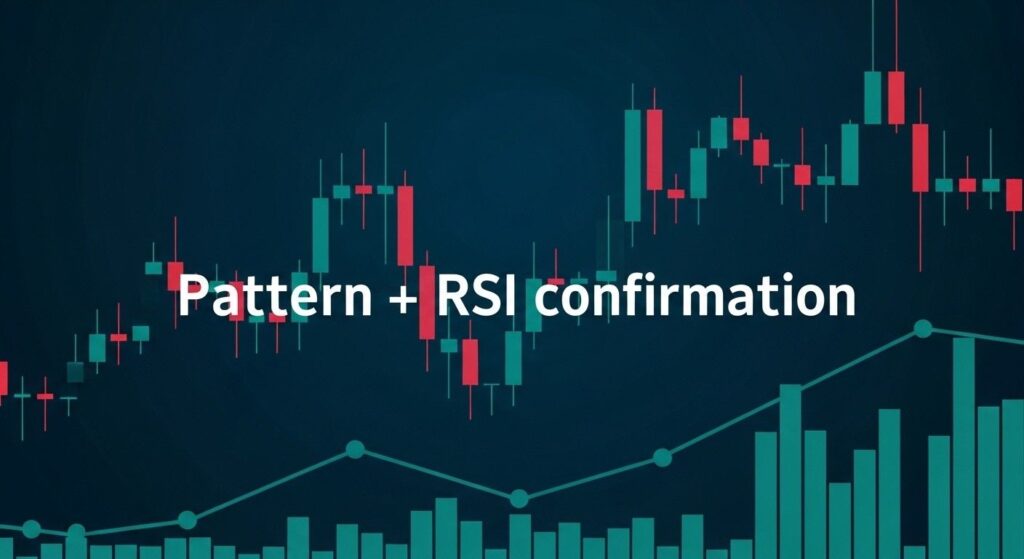
- Hammer + RSI oversold → Strong buy
Step 5: Practice with Real Charts
Practice is key.
Tips:
- Use demo account
- Analyze daily charts
- Track your learning
Screenshot Suggestion:
Chart showing hammer + RSI confirmation.
Common Mistakes to Avoid
- Ignoring trend
→ Patterns alone are weak
→ Always check trend - Trading every pattern
→ Not all patterns work
→ Wait for strong setup - No confirmation
→ Leads to false signals
→ Use indicators - Overtrading
→ Too many trades = losses
→ Focus on quality - Lack of patience
→ Beginners rush trades
→ Wait for confirmation
India vs USA Comparison
| Factor | India Market | USA Market |
| Popular Use | Intraday + Swing | Day trading + Options |
| Volatility | Moderate | High |
| Chart Tools | Zerodha, Upstox | TradingView, Robinhood |
| Pattern Reliability | Good | Very High (liquidity) |
Visual Elements (Suggested)
Image 1:
Basic candlestick structure
Alt text: “Candlestick parts open close high low explained”

Image 2:
Bullish and bearish patterns
Alt text: “Common candlestick patterns chart”
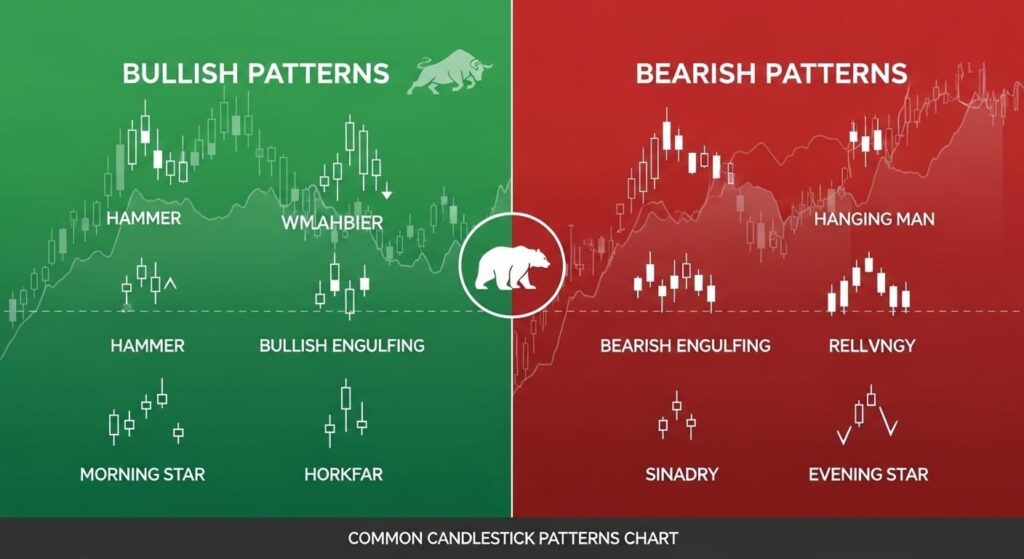
Image 3:
Hammer pattern in NIFTY chart
Alt text: “Hammer candlestick example India market”
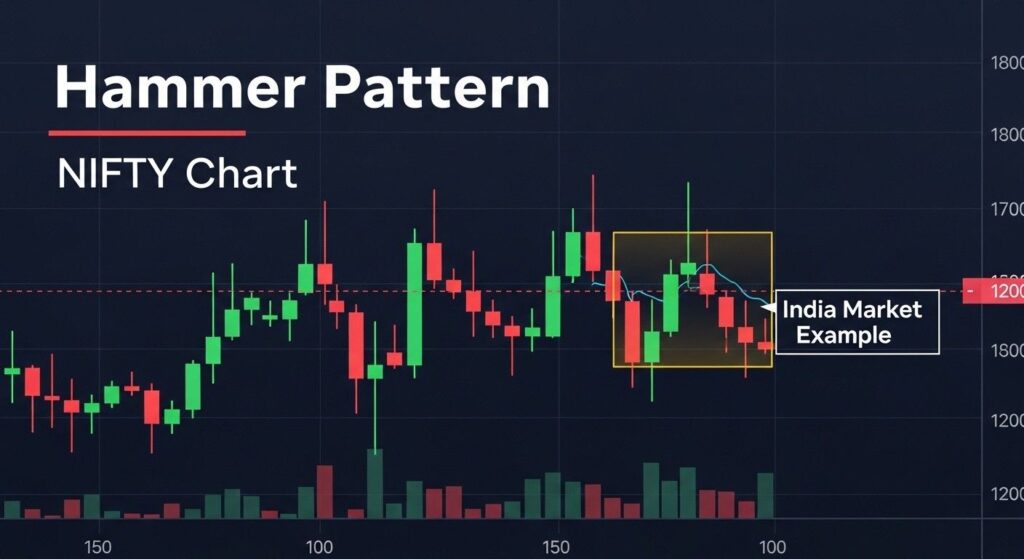
Image 4: Pattern + RSI confirmation
Alt text: “Candlestick pattern with RSI indicator”
Actionable Tips
- Focus on 2-3 patterns only → Don’t try to learn everything at once
- Always check trend → Patterns work best with trend
- Use confirmation → Combine with RSI or MA
- Practice daily → Analyze charts regularly
- Stay disciplined → Follow rules, avoid emotions
Question 1: What is the best candlestick pattern for beginners?
Answer: Hammer and engulfing patterns are easy and reliable for beginners to understand and use.
Question 2: Are candlestick patterns accurate?
Answer: They are helpful but not 100% accurate. Always use confirmation tools like indicators.
Question 3: Can I use candlestick patterns in intraday trading?
Answer: Yes, they are widely used in intraday trading for quick decision-making.
Question 4: How many patterns should I learn?
Answer: Start with 3–5 important patterns and master them before learning more.
Question 5: Do candlestick patterns work in Indian market?
Answer: Yes, they work effectively in Indian markets like NIFTY and Sensex when used correctly.
CONCLUSION
Learning Candlestick Patterns: Complete Guide with Examples can significantly improve your trading skills. These patterns help you understand market behavior, identify opportunities, and make better decisions.
Start small—focus on a few patterns, combine them with trend and indicators, and practice regularly.
With time, you’ll gain confidence and accuracy.