
META DESCRIPTION:
Learn Bull Market vs Bear Market differences with examples. Understand trends, strategies, and how to profit in any market condition.
INTRODUCTION
Did you know that the stock market doesn’t always go up? Ever wondered why sometimes stocks keep rising, while other times they crash for months?

The answer lies in understanding Bull Market vs Bear Market: What’s the Difference? A bull market means rising prices and optimism, while a bear market means falling prices and fear. In this article, you’ll learn how to identify both market conditions, how they impact Indian markets like NIFTY and Sensex, and most importantly—how you can adjust your strategy to make smart trading decisions in any situation.
What is Bull Market vs Bear Market: What’s the Difference? (For beginners)
Understanding Bull Market vs Bear Market: What’s the Difference? is the foundation of stock market learning.
Bull Market (Rising Market)
A bull market is when stock prices are rising continuously over a period of time.
Key features:
- Prices go up consistently
- Investors feel confident and optimistic
- Economy is usually strong
- More people invest in stocks
Example:
If a stock rises from ₹500 to ₹800 over months, it’s part of a bull trend.
Bear Market (Falling Market)
A bear market is when stock prices fall continuously, usually by 20% or more.
Key features:
- Prices go down consistently
- Investors feel fear and panic
- Economic slowdown or uncertainty
- Selling pressure increases
Example:
If NIFTY falls sharply over months due to global crisis, it’s a bear market.
Why are they called Bull and Bear?
- Bull attacks upward → Market goes up
- Bear attacks downward → Market goes down
Simple and easy to remember!
Why Bull Market vs Bear Market Matters for Traders (India context)
In India, markets like NIFTY 50 and Sensex move in cycles. Understanding these cycles helps you make better decisions.
Importance for Indian Traders
- Helps you choose the right strategy
- Avoids losses during downturns
- Maximizes profit during uptrends
Example: Indian Market Scenario
Bull Market Example:
- Post-COVID recovery (2020–2021)
- Stocks like Reliance, TCS, Infosys surged
- NIFTY reached new highs
Bear Market Example:
- 2008 financial crisis
- COVID crash in March 2020
- Markets fell rapidly
Real Impact
- In a bull market → Buy more, hold longer
- In a bear market → Protect capital, avoid risky trades
If you don’t understand market type, you may:
- Buy at the wrong time
- Sell in panic
How to Apply Bull Market vs Bear Market (Step by Step)
Step 1: Identify Market Trend
Before trading, always check if market is bullish or bearish.
How to identify:
- Look at index charts (NIFTY, Sensex)
- Check trend direction
- Use moving averages
Signals:
- Higher highs → Bull market
- Lower lows → Bear market
Screenshot Suggestion:
NIFTY chart showing upward vs downward trend.
Step 2: Choose Strategy Based on Market
Different markets require different strategies.
In Bull Market:
- Buy stocks on dips
- Focus on growth stocks
- Hold positions longer
In Bear Market:
- Avoid aggressive buying
- Use stop loss
- Consider short selling (advanced)
Step 3: Use Indicators for Confirmation
Indicators help confirm market direction.
Useful indicators:
- Moving Average (50-day, 200-day)
- RSI
- MACD
Example:
- Price above 200 MA → Bullish
- Price below 200 MA → Bearish
Step 4: Manage Risk Properly
Risk management is crucial in both markets.
Tips:
- Always use stop loss
- Don’t invest all money at once
- Diversify portfolio
Step 5: Track News and Global Factors
Markets react to news and global events.
Important factors:
- RBI policies
- Inflation data
- US market trends
Screenshot Suggestion:
News + chart reaction example.
Common Mistakes to Avoid
- Assuming market will always rise
→ Beginners ignore risk
→ Always prepare for downturn - Panic selling in bear market
→ Emotional decisions lead to losses
→ Follow strategy - Overtrading in volatile markets
→ Leads to losses
→ Trade less, focus more - Ignoring trend
→ Trading against trend is risky
→ Follow market direction
No risk management
→ Biggest mistake
→ Always use stop loss
India vs USA Comparison
| Factor | India Market | USA Market |
| Major Index | NIFTY, Sensex | S&P 500, NASDAQ |
| Volatility | Moderate | High |
| Market Reaction | Slower | Faster |
| Retail Participation | Growing | Very High |
| Trading Style | Delivery + Intraday | Options-heavy |
Visual Elements (Suggested)
Image 1:
Bull vs Bear illustration
Alt text: “Bull market vs bear market comparison”

Image 2:
NIFTY bull trend chart
Alt text: “Nifty bullish trend example”

Image 3:
Bear market crash chart
Alt text: “Stock market crash bearish trend”
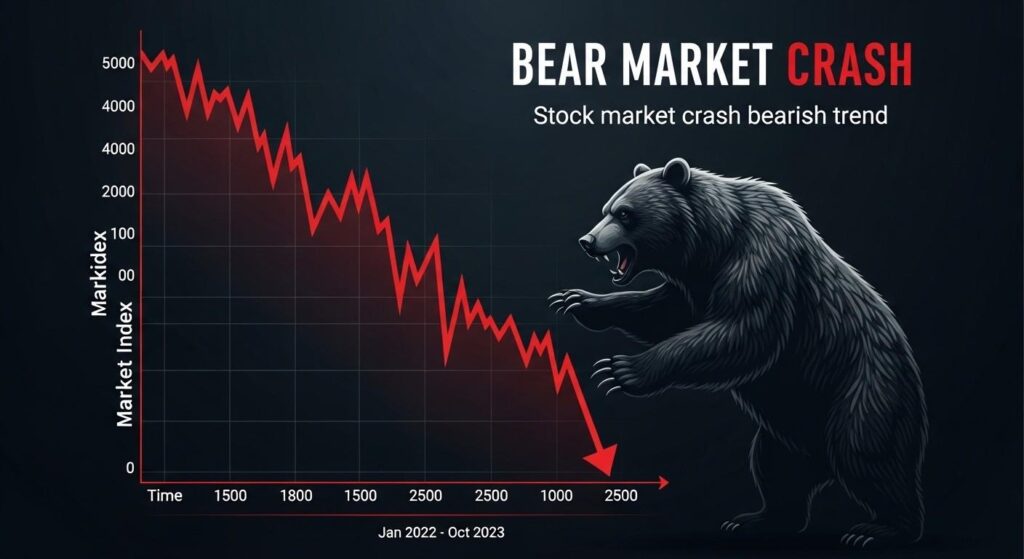
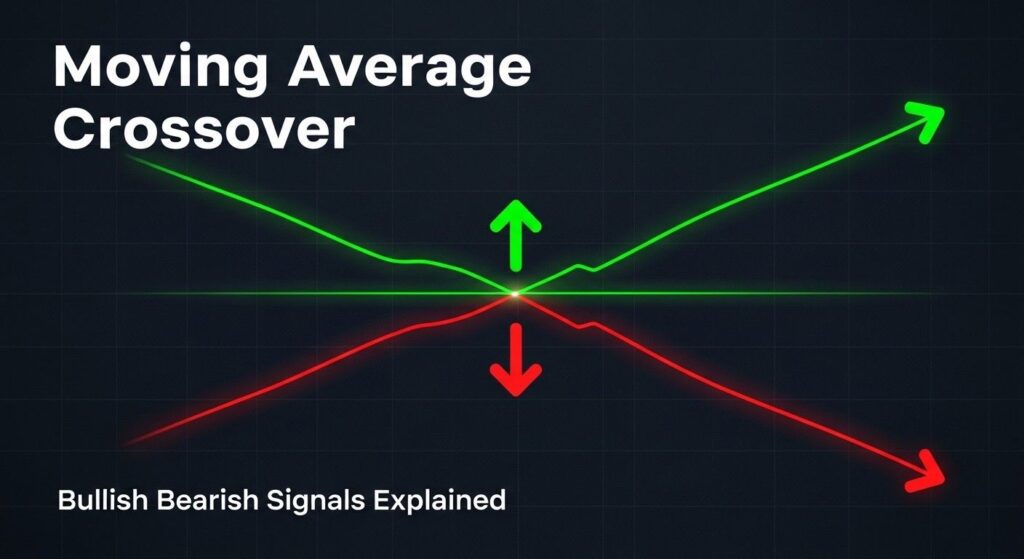
Image 4:
Moving average crossover
Alt text: “Moving average bullish bearish signal”
Actionable Tips
- Identify trend daily → Check NIFTY direction before trading
- Don’t fight the market → Follow trend instead of predicting
- Use stop loss always → Protect your capital
- Stay calm in bear market → Avoid panic decisions
- Learn continuously → Market conditions keep changing
Question 1: What is a bull market in simple terms?
Answer: A bull market is when stock prices are rising and investors are confident. It usually happens during economic growth.
Question 2: What is a bear market?
Answer: A bear market is when stock prices fall for a long period, usually due to economic slowdown or negative sentiment.
Question 3: How do I know if the market is bullish or bearish?
Answer: You can check index trends like NIFTY or Sensex and use indicators like moving averages to identify direction.
Question 4: Can I earn money in a bear market?
Answer: Yes, through strategies like short selling or focusing on defensive stocks, but it requires more experience.
Question 5: Which market is better for beginners?
Answer: Bull markets are easier for beginners because prices generally rise, making it easier to profit.
CONCLUSION
Understanding Bull Market vs Bear Market: What’s the Difference? is essential for every trader. These market phases decide your strategy, risk level, and profit potential.
In a bull market, focus on growth and holding. In a bear market, protect your capital and stay disciplined.
The key is not to predict the market—but to adapt to it.
Which strategy will you try first? Comment below!