
META DESCRIPTION:
Learn how to read stock market charts for beginners step-by-step. Understand patterns, trends, and indicators to trade smarter.
INTRODUCTION
Did you know that most successful traders don’t rely on news—they rely on charts? Ever wondered why some traders can predict price movements while others struggle?
The answer lies in understanding how to read stock market charts for beginners. Charts are like a map of the market—they show where a stock has been and where it might go next.
In this article, you’ll learn everything from basic chart types to advanced concepts like trends, patterns, and indicators. Whether you’re trading in India or exploring global markets, this beginner-friendly guide will help you read charts with confidence.

What is How to Read Stock Market Charts for Beginners? (For beginners)
Reading stock market charts means understanding how a stock’s price moves over time using visual data. These charts help you analyze price trends, volume, and patterns.
At its core, a chart shows:
- Price movement (up or down)
- Time duration (minutes, days, months)
- Trading activity (volume)
Common Chart Types
1. Line Chart
- Simplest chart
- Shows closing prices only
- Best for beginners
2. Bar Chart
- Shows open, high, low, close (OHLC)
- More detailed than line chart
3. Candlestick Chart (Most Popular)
- Visual and easy to understand
- Shows price action clearly
- Used by most traders in India and globally
Example:
If a stock like Reliance moves from ₹2,400 to ₹2,500, the chart visually shows this movement, helping you understand the trend.
Why How to Read Stock Market Charts for Beginners Matters for Traders (India context)
In India, markets like NIFTY 50 and Sensex move based on multiple factors—news, economy, global cues. But charts simplify everything.
Why charts are important:
- Help identify entry and exit points
- Reduce emotional trading
- Improve decision-making
Indian Market Example
- If NIFTY 50 is making higher highs → Market is bullish
- If Sensex is falling consistently → Bearish trend
Real-Life Scenario
Suppose you’re trading stocks like TCS or HDFC Bank:
- Without charts → Guesswork
- With charts → Data-based decision
Charts give you an edge, especially in intraday trading and swing trading.
How to Apply How to Read Stock Market Charts for Beginners (Step by Step)
Step 1: Choose the Right Chart Type
Start with candlestick charts.
Why?
- Easy to understand
- Shows market psychology
- Widely used in platforms like TradingView
What to focus on:
- Green candle = price up
- Red candle = price down
Screenshot Suggestion:
Show a candlestick chart with green and red candles labeled.
Step 2: Understand Time Frames
Charts can show different time frames:
- 1-minute → Intraday trading
- 1-hour → Short-term
- Daily → Swing trading
- Weekly → Long-term
Example:
- Day trader → Uses 5-min chart
- Investor → Uses daily or weekly chart
Tip:
Always match your chart timeframe with your trading style.
Screenshot Suggestion:
Show same stock in 5-min vs daily chart comparison.
Step 3: Identify Trends
Trend is the most important concept.
Types of Trends:
- Uptrend → Higher highs, higher lows
- Downtrend → Lower highs, lower lows
- Sideways → No clear direction
How to spot:
- Draw trend lines
- Observe price movement
Example:
If Infosys is continuously rising → Uptrend → Buy opportunity
Step 4: Learn Support and Resistance
These are key levels where price reacts.
- Support → Price stops falling
- Resistance → Price stops rising
Why important?
- Helps you decide entry and exit points
Example:
- Stock hits ₹1,000 multiple times → Strong support
- Fails to cross ₹1,200 → Resistance
Screenshot Suggestion:
Chart with support and resistance lines marked.
Step 5: Use Basic Indicators
Indicators help confirm your analysis.
Popular indicators:
- Moving Average (MA)
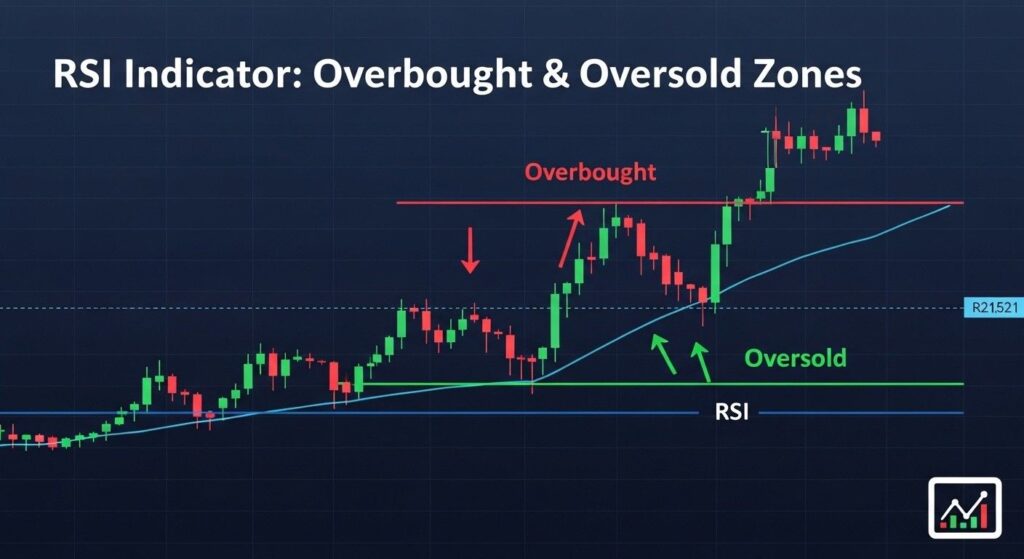
- RSI (Relative Strength Index)
- MACD
Simple use:
- RSI > 70 → Overbought
- RSI < 30 → Oversold
Tip:
Don’t use too many indicators—keep it simple.
Common Mistakes to Avoid
- Overloading charts with indicators
→ Makes analysis confusing
→ Stick to 2-3 indicators - Ignoring trend direction
→ Trading against trend leads to losses
→ Always follow trend - Using wrong timeframe
→ Leads to bad decisions
→ Match timeframe with strategy - Emotional trading
→ Fear and greed ruin discipline
→ Follow rules
Not practicing enough
→ Charts need experience
→ Use demo trading first
India vs USA Comparison
| Factor | India Market | USA Market |
| Market Timing | 9:15 AM – 3:30 PM | 9:30 PM – 4:00 AM (IST) |
| Volatility | Moderate | High |
| Popular Index | NIFTY, Sensex | S&P 500, NASDAQ |
| Trading Style | Delivery + Intraday | Options + Day trading |
| Tools | Zerodha, Upstox | Robinhood, TD Ameritrade |
Visual Elements (Suggested)
Image 1:
Candlestick chart with labeled parts
Alt text: “Candlestick chart explained for beginners”
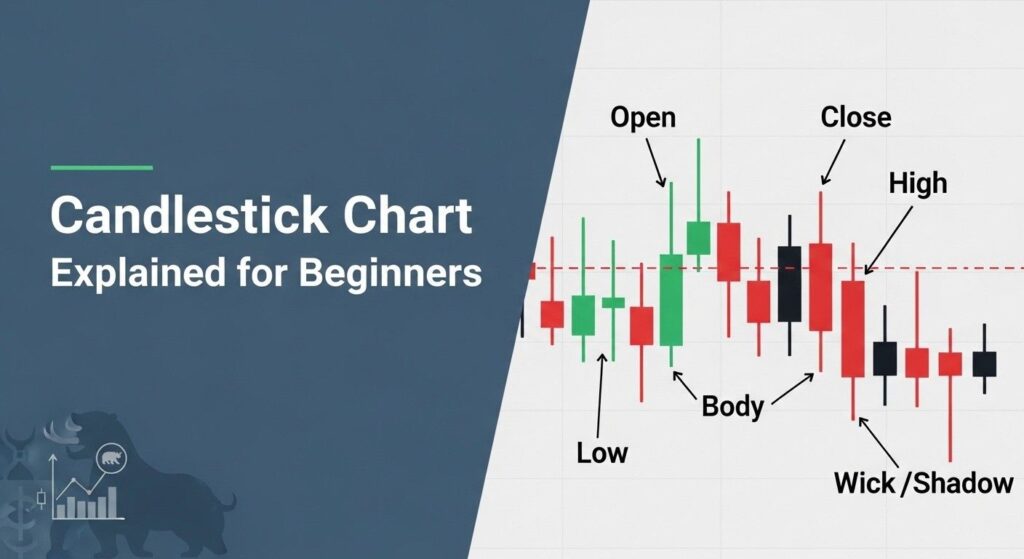
Image 2:
Trend lines showing uptrend and downtrend
Alt text: “Stock market trend identification example”

Image 3:
Support and resistance levels
Alt text: “Support and resistance levels in stock chart”
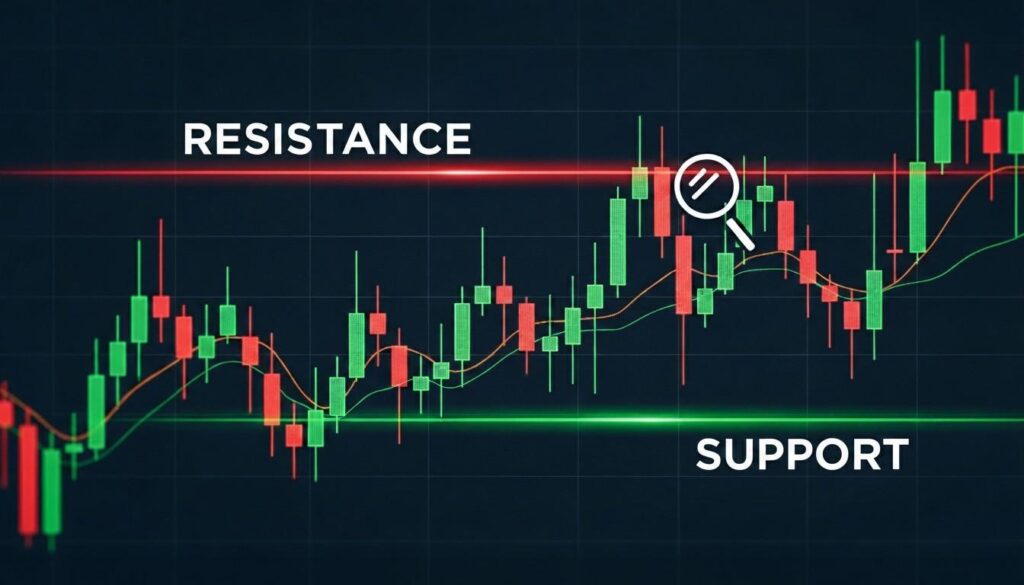
Image 4:
RSI indicator example
Alt text: “RSI indicator overbought oversold example”
Actionable Tips
- Start with one chart type → Focus on candlestick charts only
- Use demo trading → Practice without risking money
- Follow trend → Trend is your best friend
- Keep charts clean → Avoid too many indicators
- Review daily → Analyze charts every day to improve
Question 1: What is the easiest chart for beginners?
Answer: Candlestick charts are the easiest and most widely used. They visually show price movements and trends clearly.
Question 2: Can I learn chart reading without trading?
Answer: Yes, you can practice using demo accounts or paper trading. This helps you learn without financial risk.
Question 3: How long does it take to learn chart reading?
Answer: Basics can be learned in a few weeks, but mastery takes months of practice and real-market experience.
Question 4: Which indicator is best for beginners?
Answer: RSI and Moving Average are simple and effective for beginners to understand market momentum.
Question 5: Is chart reading enough for trading?
Answer: No, you should combine chart reading with risk management and basic fundamental analysis.
CONCLUSION
Learning how to read stock market charts for beginners is one of the most important skills in trading. Charts help you understand trends, identify opportunities, and make informed decisions.
Start simple—focus on candlesticks, trends, and support/resistance. With regular practice, your confidence will grow.
Which strategy will you try first? Comment below!
👉 Related articles:
- “Best Intraday Trading Strategies for Beginners”
- “What is Technical Analysis in Stock Market”
- “How to Start Trading in India”